How Can I Monitor Shifts in Sentiment About Key Suppliers in The Press?

In our globally interconnected economy, continuous operations rely heavily on suppliers. Although standard evaluations of supplier risk, such as financial data, performance metrics, and compliance, are vital, media portrayals of suppliers offer a powerful yet often neglected indicator.
For professionals in procurement, risk management, and supply chain, negative shifts in media sentiment (adverse media) offer critical early warning signals. Recognizing the media as a vital early indicator can inspire confidence in proactive risk detection, helping organizations stay ahead of issues like labor disputes or regulatory investigations before they escalate.
How media sentiment indicates supplier risk
A shift toward increasingly negative sentiment, away from neutral or positive sentiment, may be an early indicator that a supplier is facing challenges that could compromise its reliability or reputation. Relevant negative media reports about suppliers could, for example, signal:
- Operational issues such as supply shortages or facility closures.
- Financial distress, including profit warnings or high debt levels.
- ESG concerns, which are controversies related to environmental, social, or governance practices.
- Legal or regulatory risks, such as investigations or increased scrutiny from authorities.
These warning signs can appear in the media weeks or even months before official public disclosures. By actively monitoring media sentiment, organizations can proactively detect these shifts and assess the potential downstream impact on their supply chains.
How to set up a monitoring system for sentiment shifts in the press
Tracking sentiment shifts in the media requires a structured approach. By clearly defining what to monitor, collecting relevant information, and analyzing how narratives evolve, organizations can build a reliable early-warning system for supplier risk. The following steps outline how to set up a monitoring framework that helps detect meaningful changes in how suppliers are discussed in the press.
Step 1: Identify what to monitor
The first step in tracking supplier sentiment is defining the scope of your monitoring. Without a clear structure, monitoring efforts can quickly become noisy and difficult to make more effective and manageable.
Start by identifying the entities (names) related to your suppliers that should be tracked in the media. This typically includes the supplier’s company name, commonly used abbreviations, subsidiaries, and key executives. In some cases, it can also be useful to include important operational assets such as manufacturing plants, distribution hubs, or flagship product lines, especially if disruptions at these locations could affect your supply chain.
In addition to defining the entities you would like to monitor, it is important to define the types of risks you want to monitor for. These risks can be translated into relevant keywords that often appear in news reporting when issues arise. For example, organizations may track terms related to financial stress (such as debt restructuring or bankruptcy), operational disruptions (factory shutdowns, strikes, recalls), or legal and regulatory issues (investigations, sanctions, lawsuits).
By combining supplier names with risk-related keywords, you can create targeted monitoring queries that surface the most relevant coverage while reducing noise from irrelevant media.
Step 2: Collecting and aggregating media coverage
Once monitoring parameters are defined, the next step is gathering relevant information from a broad range of sources. These may include:
- International and regional news outlets
- Industry publications and trade journals
- Financial media and analyst commentary
- Blogs and niche sector platforms
Automated media monitoring tools and news aggregators can help consolidate this information into a centralized feed, making it easier to track developments in real time.
Step 3: Applying sentiment analysis
Sentiment analysis uses natural language processing (NLP) to classify the tone of media coverage. Articles are typically categorized as positive, negative, or neutral, and assigned a sentiment score.
This process enables organizations to quantify how the media portrays a supplier over time. For instance, a company may typically receive neutral coverage, but a series of negative articles could indicate an emerging issue that warrants attention.
Advanced analysis can also evaluate sentiment toward individual entities mentioned within a single article, allowing teams to distinguish between criticism of one company and praise of another in the same report.
Step 4: Tracking trends over time
Individual articles rarely tell the full story. The real value lies in tracking sentiment trends across weeks or months. Useful metrics include:
- The percentage of negative versus positive coverage
- The overall sentiment score over time
- The volume of media mentions
- Spikes in coverage from influential outlets
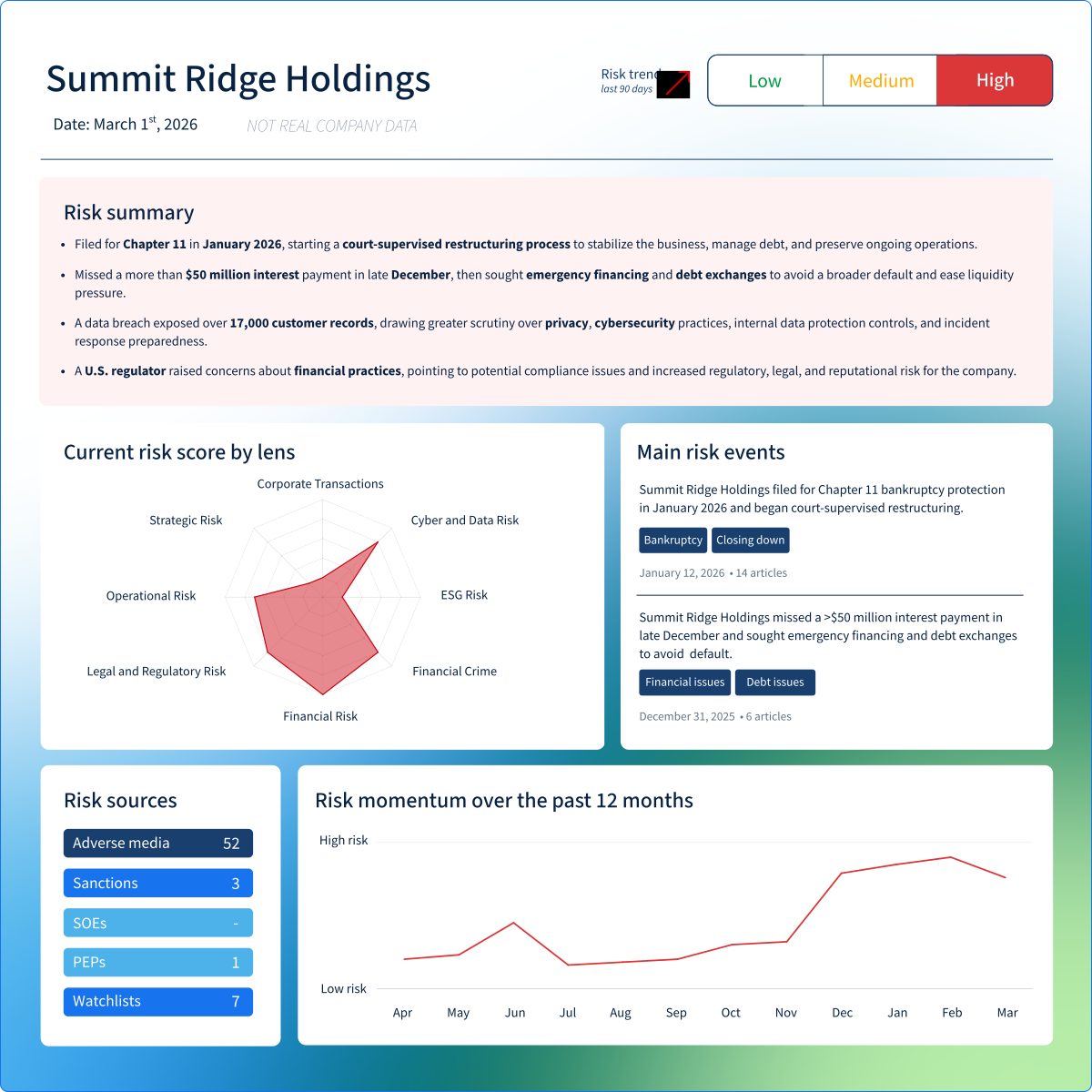
Visualizing these metrics through dashboards or reports makes it easier to detect shifts in narrative and identify potential risk signals.
Step 5: Setting up early-warning signals
Beyond periodic analysis, organizations can benefit from real-time alerts when sentiment changes significantly. Alerts can be triggered by events such as:
- A sudden increase in negative coverage
- Mentions of a supplier in major international media
- News articles containing high-risk keywords
These notifications allow risk teams to quickly investigate the underlying issue and assess potential implications for supply chain operations.
Step 6: Human analysis
While automated tools can process large volumes of information, human judgment remains essential. Combining these approaches can reassure you that critical nuances are understood, leading to more confident and accurate risk assessments.
Strengthen supplier risk monitoring with media insights
Monitoring press sentiment adds an important layer to traditional supplier risk management. While financial reports and operational metrics provide valuable information, they often reflect developments after they have occurred. Media coverage, on the other hand, can highlight emerging concerns and shifting narratives much earlier.
By systematically tracking how suppliers are discussed in the press, organizations can detect potential warning signals sooner, gain a broader understanding of external perceptions, and respond more proactively to developments that could affect their supply chains.
Automate sentiment monitoring with Owlin
Keeping track of global media coverage manually can be challenging, especially when suppliers operate across multiple regions and languages. Owlin’s external risk monitoring platform enables organizations to monitor news and other public sources at scale, detect relevant events, and highlight shifts in sentiment that may signal emerging supplier risks. By bringing these insights together in one place, risk and procurement teams can stay informed and respond more quickly to developments that may affect their supply chains.
Want to see it in action?
If you’d like to see how automated media monitoring and sentiment analysis can support your supplier risk management, we’d be happy to show you. Contact us or schedule a demo to see how Owlin helps organizations monitor suppliers, detect early warning signals, and stay ahead of potential disruptions.