What Are The Top Features to Look For in Adverse Media Monitoring Software?

Adverse media monitoring software enables organizations to adopt an outside-in perspective when overseeing large vendor portfolios. For many risk teams, it has become a critical component of effective risk management, providing timely insights into emerging reputational, regulatory, and operational risks.
However, with a growing number of solutions on the market, determining which platform truly aligns with your organization’s needs can be challenging. In this blog, we outline the key features to evaluate when selecting adverse media monitoring software and explain why each matters.
Owning the data pipelining = flexibility and control
A strong adverse media monitoring solution should own its data pipeline, from ingestion to processing and enrichment. Why? Because owning the pipeline means the provider can adapt how data is processed and categorized. It enables customization, faster updates, and improved quality control. For organizations with specific risk frameworks or regulatory requirements, this flexibility ensures that the solution works for you, not the other way around.
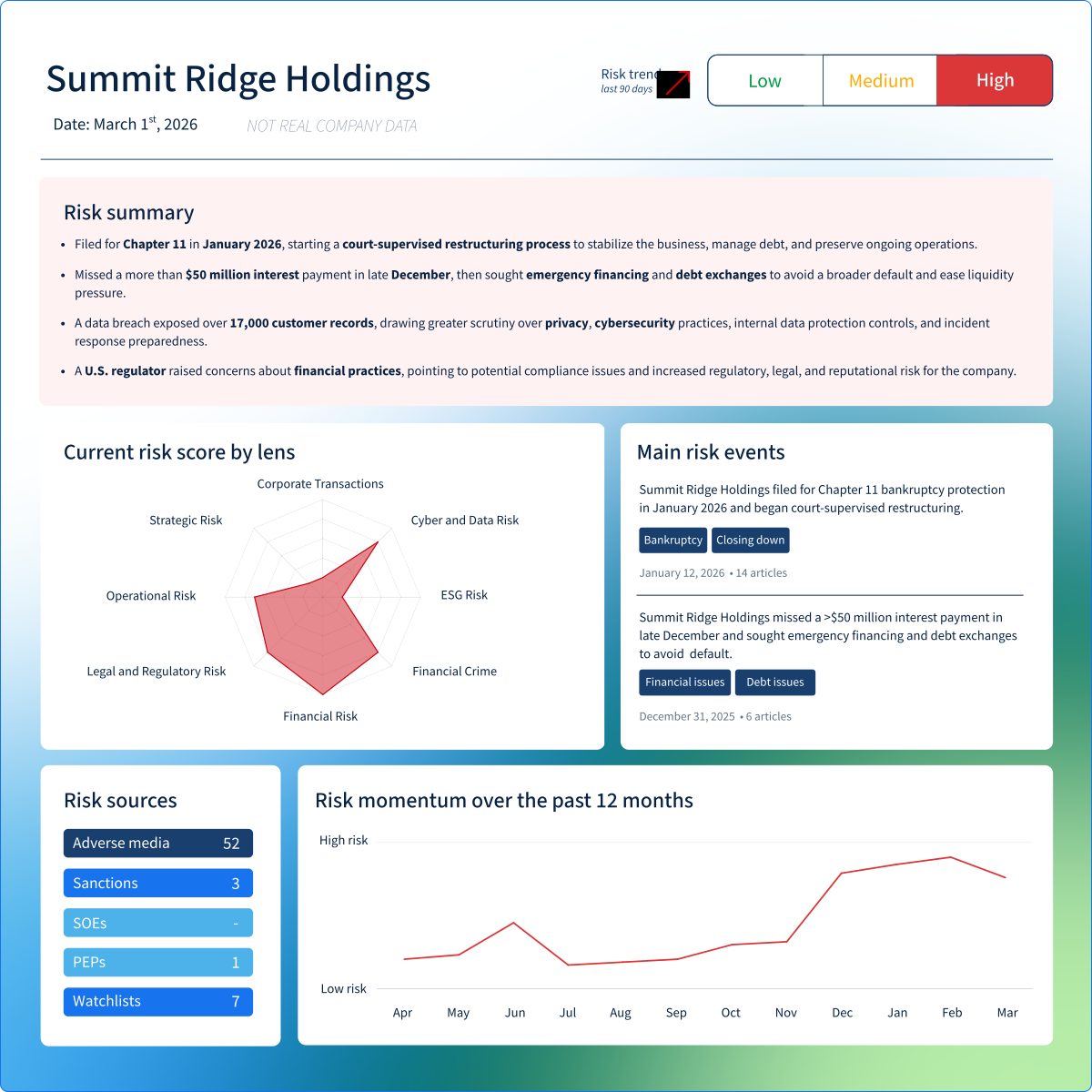
Examples of processing and categorizing adverse media.
- Risk Prioritization: When monitoring a large portfolio of vendors, clients, or counterparties, clarity is key. A clear risk prioritization overview enables you to instantly see which entities are categorized as low, medium, or high risk.
- Risk Scores: Company Risk Scores provide a structured, scalable way to assess risk across large portfolios. Additionally, scores enable consistent comparisons of companies, identify trends over time, and support decision-making with data-backed insights.
- Event detection: A single news article rarely tells the full story. Events connect current developments to historical events, providing background information, context, and related coverage. A structured view with events allows analysts to understand how a situation has evolved over time and whether a risk signal is escalating or isolated.
Case Management Enables Team Collaboration
Adverse media monitoring should not exist in isolation. It must support workflows.
Built-in case management functionality enables team members to collaborate, document findings, assign responsibilities, and record decisions. This is particularly important for compliance and audit purposes, where demonstrating internal processes is as important as identifying risks.
Customizable Risk Taxonomies Improve Relevance
Not all teams look for the same risks. An effective solution should offer extended, customizable risk taxonomies tailored to your use case, whether you focus on ESG, financial crime, operational risk, regulatory exposure, or reputational threats. The ability to monitor exactly what matters to your organization significantly increases signal relevance and reduces noise.
24/7 News Monitoring Is Critical for Timely Risk Detection
Speed matters in risk management. Some solutions update news feeds with delays, meaning you might only learn about a critical risk event days later. In contrast, continuous 24/7 monitoring ensures that you are alerted as soon as relevant information becomes available.
In volatile markets, even a few hours can make a difference.
Access to Additional Data Sources Strengthens Risk Coverage
Often, risk teams want to extend the data sources they monitor for external risk signals. Therefore, an adverse media monitoring solution should not rely solely on traditional news sources. The option to incorporate additional data sources, such as PEP lists, sanctions databases, regulatory publications, and consumer reviews, provides a more comprehensive view of risk exposure. The broader the coverage, the more comprehensive your due diligence process becomes.
Flexible Delivery Options Are Key
Different organizations consume risk intelligence in different ways.
A strong solution should be available as:
- A standalone platform
- An API integration within your existing systems
- Automated reports or newsletters
This flexibility ensures the solution integrates seamlessly into your workflow rather than disrupting it.
Language Coverage and Processing Methodology Matter
Risk does not speak only one language. Global monitoring requires extensive language coverage and robust processing capabilities. It is important to understand how multilingual content is handled. Is content always translated into English before analysis? Is native-language processing used? High-quality language processing reduces blind spots and improves detection accuracy across jurisdictions.
Auditability Is Non-Negotiable for Compliance
Regulators increasingly expect transparency. Your monitoring solution should allow you to track:
- What was monitored
- When it was monitored
- What information was available at the time
- What decisions were made
Full auditability ensures defensibility during regulatory reviews and internal audits.
Flexible Packaging Supports Cost Efficiency
Organizations differ in size, complexity, and maturity. Look for providers that offer scalable packaging options, such as lite, mid-tier, or fully customized solutions. This ensures you only pay for what you need while retaining the flexibility to expand as your risk management program evolves.
Why Speed of Reporting Impacts Decision-Making
In high-pressure situations, waiting for a report is not an option. Whether you require an instant overview or a downloadable report for stakeholders, the solution should generate insights quickly and reliably. Fast access to structured intelligence enables agile decision-making.
How False Positive Handling Improves Efficiency
One of the biggest challenges in adverse media monitoring is the risk of false positives. Understanding how a provider tackles irrelevant matches is critical. What percentage of alerts are false positives? How are they reduced—through AI, human validation, advanced entity recognition, or a combination? A well-optimized system minimizes noise, allowing analysts to focus on genuine risks rather than filtering irrelevant results.
How Owlin Delivers on These Requirements
At Owlin, we have built our adverse media monitoring solution around these principles.
We own our data pipeline, enabling flexible processing and rapid updates. Our real-time monitoring runs 24/7, powered by advanced AI to reduce false positives and improve entity recognition. Company Risk Scores provide structured insights across portfolios, while event timelines add valuable context to evolving risk situations.
Our customizable taxonomies, case management functionality, audit trails, and flexible delivery options, whether standalone, integrated, or report-based, ensure that risk intelligence fits seamlessly into your existing workflows. In short, we combine speed, scalability, and transparency to help organizations make confident, data-driven decisions.
Ready to Strengthen Your Adverse Media Monitoring?
Choosing the right solution is about more than ticking feature boxes, it is about ensuring your organization can identify, assess, and act on risks with confidence throughout your entire third-party risk management journey.
We understand that adverse media monitoring software supports you at multiple critical stages: during the RFI phase when you are evaluating different vendors, throughout the contracting phase when 24/7 monitoring becomes essential, and during onboarding and ongoing monitoring to ensure continuous risk visibility.
If you would like to see how Owlin can support your risk and compliance framework at each of these moments, get in touch with our team or book a personalized demo today.