Understanding German Supply Chain Act Requirements

The German Supply Chain Due Diligence Act (LkSG) has raised the bar for corporate accountability in global supply chains. Companies operating in Germany are now legally required to actively monitor their suppliers for human rights violations, environmental risks, and other sustainability concerns. Failure to comply with the German Supply Chain Act requirements can result in financial penalties, regulatory scrutiny, and significant reputational damage.
For many organizations, implementing these requirements across complex global supplier networks is a major challenge. Continuous monitoring, supplier risk analysis, incident tracking, and reporting require significant resources if done manually. That’s why many companies are turning to automated risk intelligence platforms like Owlin to help operationalize compliance and gain real-time visibility into supply chain risks.
What are the German Supply Chain Act requirements?
The German Supply Chain Act requirements establish a structured due diligence framework that companies must implement across their operations and supply chains.
Below is a simplified overview of the key requirements and how technology can help automate many of these processes.
1. Risk Management Systems
- Requirement: Companies must establish an effective risk management system to identify, prevent, minimize, and address human rights and environmental risks across their supply chains.
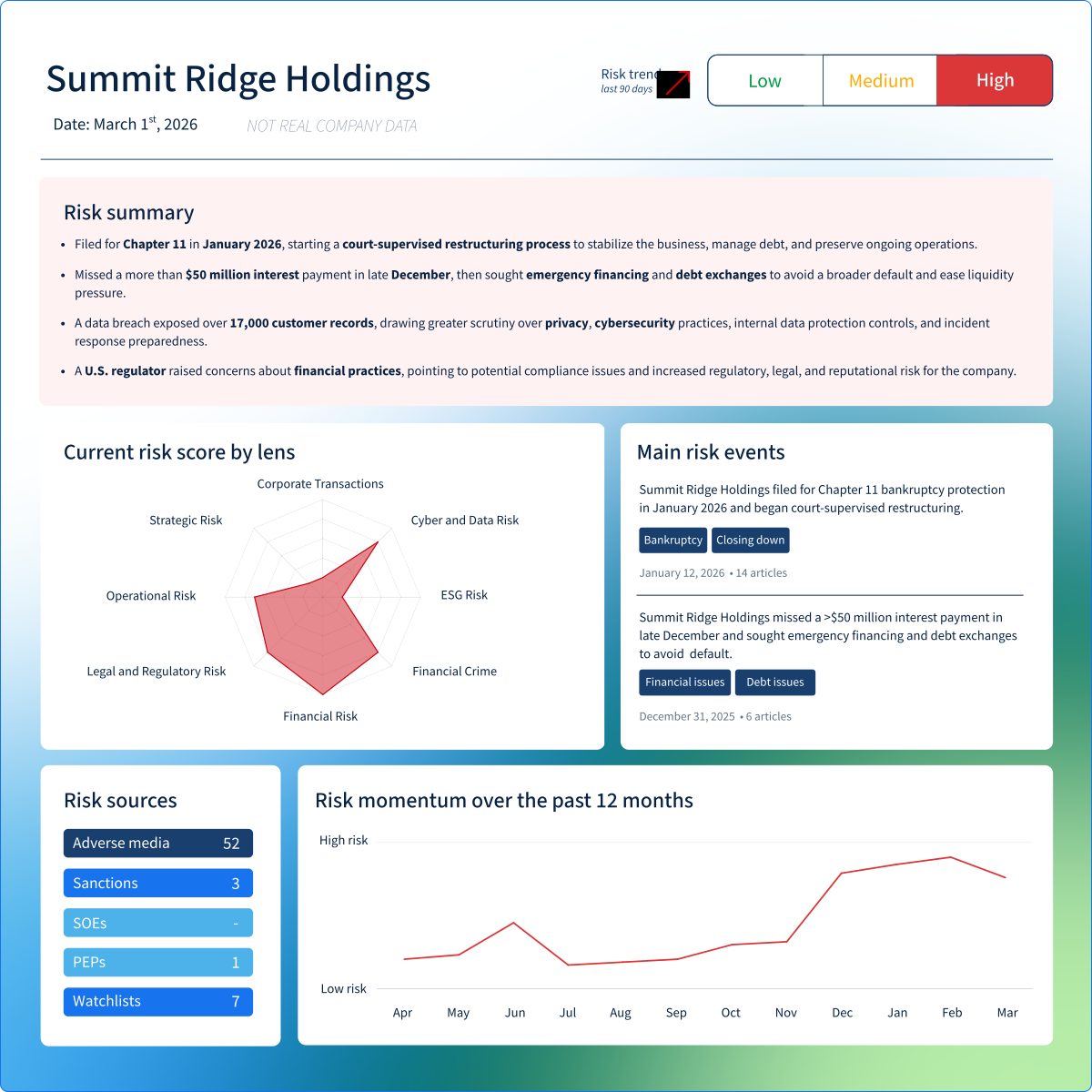
- How Owlin Helps: Owlin provides a centralized dashboard that delivers real-time visibility into supplier-related risks. By continuously monitoring global information sources, organizations can maintain an up-to-date overview of potential risk exposure across their supply chain.
2. Risk Analysis
- Requirement: Organizations must conduct regular risk assessments of their own operations and direct suppliers. This includes annual reviews and additional assessments when new risks emerge.
- How Owlin Helps: Owlin continuously monitors global news, regulatory developments, and NGO reporting using AI-driven sentiment analysis. These insights help companies quickly identify emerging risks and prioritize suppliers requiring deeper due diligence.
3. Preventive measures
- Requirement: Companies must implement preventive measures within their operations and supplier relationships to reduce identified risks. This may include supplier codes of conduct, training programs, and contractual compliance requirements.
- How Owlin Helps: Owlin enables teams to proactively identify potential issues early through continuous monitoring and risk signals, helping companies take preventive action before incidents escalate.
4. Remedial action
- Requirement: If violations are identified, companies must take immediate remedial action to address the issue and prevent recurrence.
- How Owlin Helps: It provides instant alerts when potential supplier-related incidents are detected. Structured workflows allow compliance teams to track investigations, escalate cases, and document corrective actions efficiently.
5. Monitoring indirect suppliers
- Requirement: The law requires companies to conduct due diligence on indirect suppliers when they have substantiated knowledge of potential risks deeper in their supply chain.
- How Owlin Helps: Owlin supports deep-tier supply chain monitoring by tracking local-language news, NGO publications, and other external sources. This helps organizations identify risks involving indirect suppliers that might otherwise remain hidden.
6. Complaints mechanism
- Requirement: Companies must establish a complaints procedure that allows employees, suppliers, and affected stakeholders to report potential violations confidentially.
- How Owlin helps: Owlin’s monitoring capabilities can complement internal reporting systems by identifying publicly reported incidents, allowing companies to cross-check complaints with external intelligence.
7. Policy Statement and Governance
- Requirement: Organizations must publish a policy statement outlining their human rights strategy and supply chain due diligence commitments.
- How Owlin Helps: Owlin provides risk insights that help organizations identify priority risk areas and support the development of informed governance and supplier engagement strategies.
8. Documenting and reporting
- Requirement: Companies must document their due diligence activities and publish an annual report detailing how they comply with the requirements of the German Supply Chain Act.
- How Owlin Helps: Owlin automates documentation and reporting by collecting structured data and producing audit-ready records. This simplifies compliance with regulatory reporting obligations and supports submissions to authorities.
Automating compliance with the German Supply Chain Act
Meeting the German Supply Chain Act requirements is not just about fulfilling a legal obligation. It’s about building a proactive system that continuously monitors and manages supply chain risks. By automating key elements such as supplier risk monitoring, incident detection, risk analysis, and documentation and reporting, companies can significantly reduce the operational burden of compliance while gaining deeper visibility into their global supply chains.
Owlin’s AI-driven platform helps organizations move from manual compliance processes to continuous, automated supply chain risk intelligence.
Ready to streamline your compliance?
With Owlin, compliance is not just about meeting regulatory requirements; it’s about gaining full visibility, staying ahead of risks, and protecting your supply chain and your business reputation.
Want to experience how Owlin’s German Supply Chain Act software provides real-time risk monitoring, automated insights, and streamlined reporting across your supply chain? Book a demo today or contact us to see how Owlin can help your organization stay compliant, act proactively, and manage supply chain risks with confidence.