Owlin’s New Risk Monitoring Platform: Built for How Risk Teams Actually Work

Investing in a new platform is not something you do lightly. When we set out to build the new Owlin platform, we had one goal: make risk monitoring work the way risk teams actually work.
The bar for risk monitoring keeps rising. Portfolios are growing. Regulatory expectations are increasing. And the teams responsible for monitoring need tools that don’t just keep pace; they need tools that give them an edge.
So we went back to our customers and asked: what would better look like?
Why Owlin rebuilt its risk monitoring platform
The bar for risk monitoring keeps rising. Portfolios are growing. Regulatory expectations are increasing. And the teams responsible for monitoring need tools that don’t just keep pace; they need tools that give them an edge.
Before we wrote a single line of new code, we went back to our customers. We sat with risk analysts, compliance leads, and third-party risk managers across financial services, insurance, and beyond, and asked what they needed more of. The answers were consistent:
- Improve the noise level
- Reduce the amount of manual steps
- Add advanced risk prioritization
- Combine risk signals from different sources
- More self-service tools
That list became the brief for the new platform.
What’s inside Owlin’s new monitoring platform
The new Owlin monitoring platform isn’t a feature update. It’s a ground-up rebuild, and the difference shows in the workflow:
Event Intelligence Layer: one story, not ten alerts
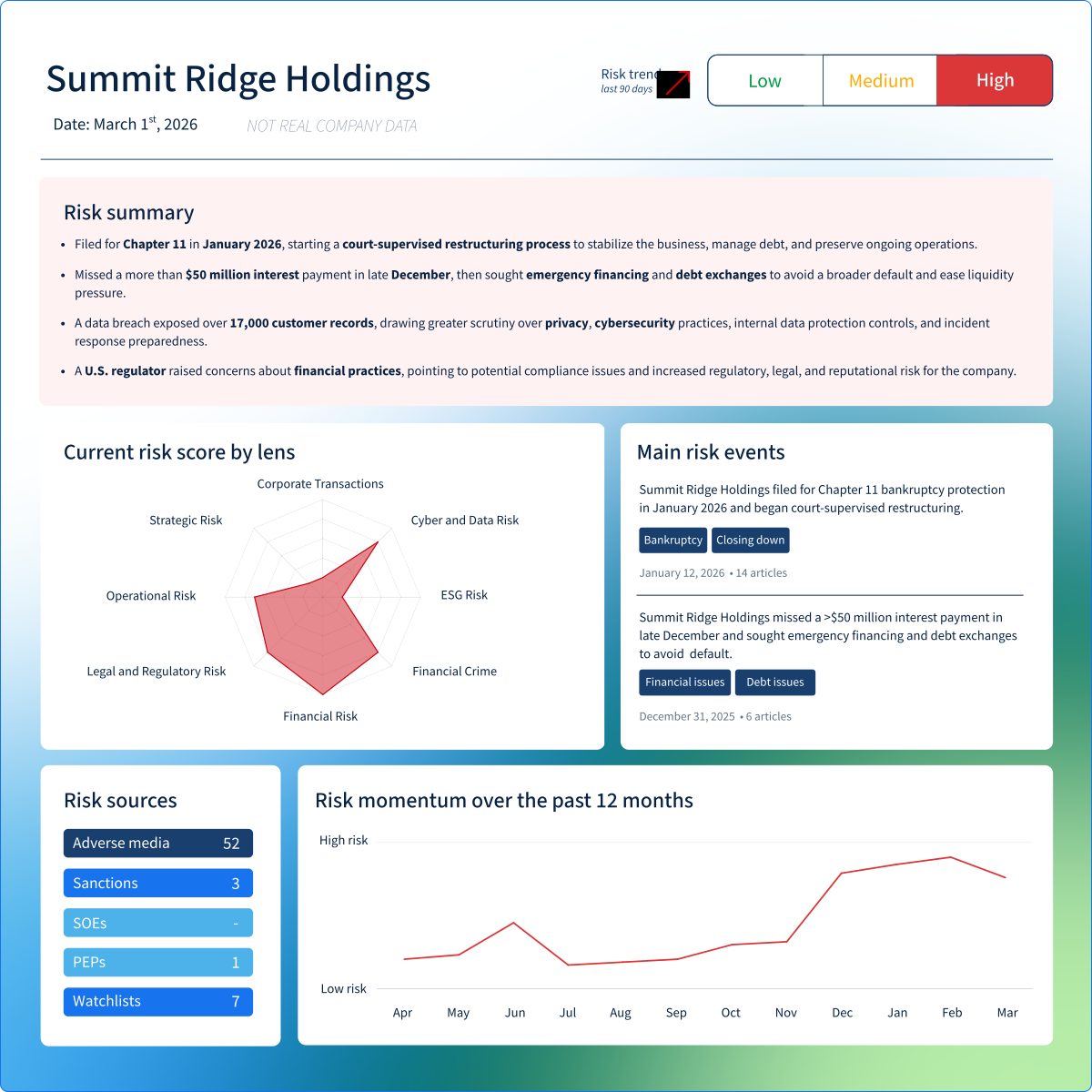
When something develops over days or weeks, a regulatory probe, a financial scandal, a breach, it used to arrive as a dozen disconnected articles. Now, related signals are automatically grouped into a single event, scored by severity, with a narrative summary and a full timeline. Your analysts’ feed becomes one clear story, reviewed once, instead of pieced together from fragments.
A risk taxonomy built deeper and wider than standard frameworks
Most platforms work off a narrow, vendor-defined set of categories. Owlin’s taxonomy goes further, more categories, more granularity, more ways to actually describe what’s happening to a vendor, not just whether it fits a checkbox. Because it’s this expansive, you can shape your feed around exactly what matters to your organization, your sector, your portfolio, instead of a generic, one-size-fits-all view.
Owlin Omnisignal: every signal type, one dashboard
Adverse media, sanctions, watchlists, PEPs, and SOEs, unified in a single, event-driven view. No switching tools. No blind spots between signal types.
Broader scope, same workload
One of the most consistent things we heard: teams wanted a wider view without a heavier workload. We monitor millions of sources, and because we own our entire data pipeline, we control the quality of what reaches you: rich enough to be thorough, curated enough that it never tips into noise. The platform lets you monitor more companies, more signals, more jurisdictions, without adding to the team’s daily burden.
AI you can actually explain
A lot of risk teams are, rightly, thoughtful about black-box AI: tools that flag something without ever showing their reasoning. We built Owlin the other way. Every signal, every score, every grouped event is structured so it can be explained, traced, and defended in front of a regulator, not just trusted on faith.
Self-service, start to finish
Managing portfolios and companies no longer means a request and a wait. You can add, adjust, and manage them yourself, without needing to involve Owlin support.
A workflow tested with real teams
We didn’t ship this and hope for the best. The workflow was built and refined with our customer base. Real analysts, real portfolios, real edge cases. It’s been stress-tested before it reached you.
Revamped alerting: tailored, flexible, and built for teams
Alerts have always been core to how the platform works. But when we went back to customers again, alerting is where they had the most left to say, and where we saw the clearest room to raise the bar further. The result is a revamped alerting experience, built around two things: flexibility and how teams actually work together.
Tailored to your risk framework
You now decide the granularity of what reaches you. Subscribe to events rather than every individual record, and volume drops right away. Narrow further to elevated risk events, or to companies moving into high risk, so a minor development doesn’t take up the same space as one that actually matters. Want visibility into one signal type specifically, like sanctions hits or news articles? You can set that too.
The result: you only see what you actually need to see, instead of sorting through alerts that aren’t relevant to you.
Built for how teams actually work
With Owlin’s alert review workflow, you choose which of your team’s alerts to follow, and share the alert channels you’ve created with teammates, so everyone stays aligned on the same developments. It’s fully self-service, so setting it up, or changing it later is quick and doesn’t require support.
Read more about what’s new in alerting →
Recognized by Chartis Research as a category leader
Chartis Research recognized Owlin as a category leader in both adverse media monitoring and TPRM solutions. It confirmed something we already believed: this approach works.
Chartis evaluates platforms on capability, client outcomes, and market momentum. Being recognized in both quadrants isn’t just a badge; it’s independent confirmation that the way we built this platform and keep building on it is the right way.
What this means for risk and compliance teams
Put together, the platform changes what your day-to-day actually looks like:
- Less time spent sorting through noise, so more of your day goes to the risk that actually matters
- One clear event instead of ten records to piece together, so a review takes minutes, not hours
- Alerts tailored to your risk framework, so you’re notified of what’s relevant to you, not a generic default
- One shared view your whole team works from, so nothing falls through the cracks between inboxes
- AI reasoning you can walk a regulator through, not a black box you have to trust on faith
- Full control over your own portfolios and alert setups, without waiting on support
See it for yourself
We built this because there was more we could do for the teams who rely on us every day. Come and see what that looks like.
FAQs
What is Owlin’s Event Intelligence Layer?
The Event Intelligence Layer is the part of Owlin’s platform that automatically groups related records, such as articles covering the same regulatory probe or scandal, into a single scored event with a narrative summary and timeline, rather than leaving analysts to piece the story together from separate alerts.
What is Owlin Omnisignal?
Owlin Omnisignal is Owlin’s unified signal layer, combining adverse media, sanctions, watchlists, PEPs, and blacklists into a single, event-driven dashboard, so risk teams don’t need to switch between separate tools for each signal type.
What did Chartis Research recognize Owlin for?
Chartis Research named Owlin a category leader in both adverse media monitoring and TPRM (third-party risk management) solutions, based on its evaluation of platform capability, client outcomes, and market momentum.
Is Owlin’s alerting self-service?
Yes. Owlin’s revamped alerting experience lets teams tailor alert granularity to their own risk framework and manage alert setups themselves, including following and sharing them with teammates, without needing to involve Owlin support.