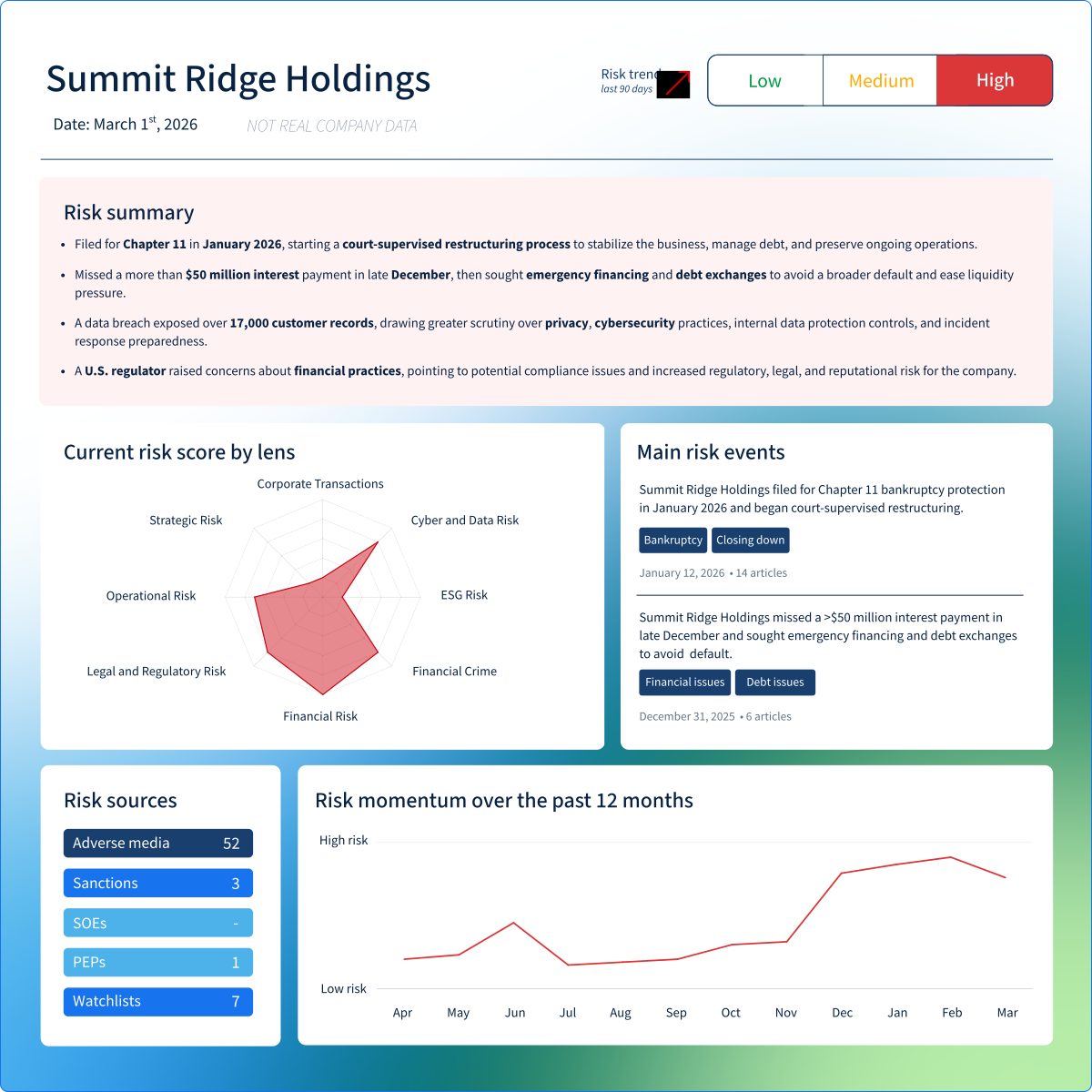
What Is an AI-Powered Third-Party Risk Intelligence Platform?

Key takeaways
- An AI-powered third-party risk intelligence platform monitors vendors, suppliers, and counterparties for adverse media, sanctions, and other risk signals.
- In regulated industries, such as financial services, risk and compliance teams rely on these tools to meet regulatory requirements.
- The right platform helps you detect third-party risks before they become costly problems for your organization.
An AI-powered risk intelligence platform is software that helps you monitor the entities you do business with for potential risks. This includes vendors, suppliers, customers, and business partners. The platform scans external sources to find adverse media, sanctions hits, regulatory actions, and other warning signs.
Traditional third-party risk solutions rely on curated databases that are updated periodically by human researchers. This makes them comprehensive in scope but limited by the time it takes to process new information. More modern platforms use artificial intelligence and natural language processing to monitor news, regulatory filings, and other public sources in real time, across dozens of languages, without waiting for manual curation.
For organizations in regulated industries, this matters because regulatory bodies increasingly expect you to demonstrate ongoing oversight of your third-party relationships. A single missed risk signal can lead to regulatory penalties, financial losses, or reputational damage.
How does an AI-powered third-party risk intelligence platform work?
AI-powered risk intelligence platforms work by connecting to thousands of global news sources, newswires, and public databases. When you add an entity to your monitoring list, the system continuously tracks mentions of that entity in connection with risk-related topics, without waiting for a human researcher to find and process the information.
The AI does the heavy lifting. It identifies which events are relevant to your risk assessment, filters out noise, and categorizes findings by risk type, whether that is financial crime, environmental violations, labor disputes, or sanctions breaches.
Crucially, it also understands context, distinguishing between an entity that is the subject of negative coverage and one that is merely referenced in passing. This gives you an outside-in view of your third parties: what the world says about them, not just what they say about themselves.
What types of risk can risk intelligence platforms monitor?
At their core, these platforms monitor for external risk signals: publicly available information that may indicate a problem with an entity you do business with. One of the most well-known signal types is adverse media: negative news coverage linking an entity to risks such as financial crime, cyber incidents, or operational failures. Most platforms also track sanctions lists, politically exposed persons (PEPs), and regulatory enforcement actions.
More sophisticated platforms go further, extending coverage to ESG factors such as labor violations, environmental incidents, and governance failures, as well as broader strategic risks that may affect your exposure to a third party over time.
Who uses AI-powered third-party risk intelligence platforms?
Risk managers and compliance officers in banks, payment service providers, and other financial institutions are primary users. They need these tools to meet Know Your Customer (KYC) and Anti-Money Laundering (AML) requirements.
Procurement teams and supply chain professionals also rely on these platforms. Regulations like the German Supply Chain Act and the EU’s Corporate Sustainability Due Diligence Directive (CSDDD) now require organizations to monitor their supplier networks for human rights and environmental risks. So, if you’re responsible for vendor oversight at your organization, a third-party risk intelligence platform can help you move from reactive to proactive risk management.
What should you look for when evaluating these platforms?
Start with coverage. Ask yourself: How many sources does the platform monitor? Does it include local and regional news in the languages and geographies where your third parties operate? A platform that only monitors English-language sources will miss risks in other markets. But breadth alone isn’t enough. Also, ask how the vendor validates what they ingest. Sources vary widely in credibility, and a platform that draws on unreliable outlets can create as many problems as it solves.
Equally important is speed. Risk doesn’t wait for a daily digest. A platform that updates feeds with significant delays could mean your team learns about a critical development hours or even days after it breaks, long after your response options have narrowed. Look for solutions that monitor continuously and surface relevant alerts as events unfold.
Finally, consider how the platform handles the gap between a match and a genuine risk. AI-powered monitoring and screening will generate results, but the quality of the underlying intelligence determines how useful those results actually are. The strongest platforms go beyond keyword matching: they understand context, assess sentiment, and distinguish between an entity that is the subject of negative coverage and one that is merely referenced in passing. This depth of analysis is what separates tools that reduce your team’s workload from those that simply shift the manual effort downstream.
Frequently asked questions about AI-powered third-party risk intelligence platforms
How does a modern AI-powered third-party risk intelligence platform differ from traditional risk databases?
Traditional databases rely on periodic reviews and updates to keep their information current. While this approach can be thorough, it creates significant lag times between when a risk event occurs and when it appears in the database. In today’s fast-moving risk environment, that gap matters. Regulatory actions, financial crime exposure, and reputational incidents can evolve quickly, making continuous, up-to-date monitoring increasingly essential for organizations seeking to stay ahead of emerging threats.
Modern platforms address this directly by monitoring sources in real time when a news article mentions your third party in connection with a risk event, the platform flags it immediately (no waiting for the next scheduled update).
Finally, traditional databases tend to focus on well-documented entities: large companies, listed individuals, and organizations with established regulatory footprints. Smaller suppliers, local partners, or recently formed entities often fall through the cracks simply because there isn’t enough structured data to build profiles for them. Modern AI-risk intelligence platforms sidestep this limitation by monitoring news and open-source information directly, so coverage isn’t dependent on whether an entity has ever been formally registered or reviewed.
What are the benefits of using a third-party risk intelligence platform?
The primary benefit is visibility. You gain a clearer picture of risks across your third-party ecosystem without relying solely on vendors’ self-reported information. Moreover, they save time. Instead of manually searching for risk signals for each entity, you receive prioritized alerts when risks emerge. Your team can focus on investigating and resolving issues rather than searching for them.
How do these platforms support audit and compliance requirements?
Regulators expect you to maintain an audit trail of your screening and monitoring activities. A third-party risk intelligence platform automatically creates this documentation, recording when you screened each entity and what findings resulted. This matters when examiners ask you to demonstrate your due diligence process. You can show that monitoring is ongoing, findings are investigated, and actions are documented.
Can a third-party risk intelligence platform replace manual due diligence?
No. These platforms enhance your due diligence process by automating source scanning and alert generation. Human judgment remains essential for evaluating findings, making risk decisions, and conducting deeper investigations when warranted.
The case for AI-powered third-party risk intelligence
Third-party risk doesn’t stand still, and neither should your monitoring. AI-powered risk intelligence platforms give compliance, procurement, and risk teams the visibility they need to stay ahead of emerging threats across their entire third-party ecosystem, in real time. Whether you’re meeting regulatory expectations in financial services or fulfilling supply chain due diligence obligations, the right platform shifts your organization from reactive to proactive risk management.